
 editor
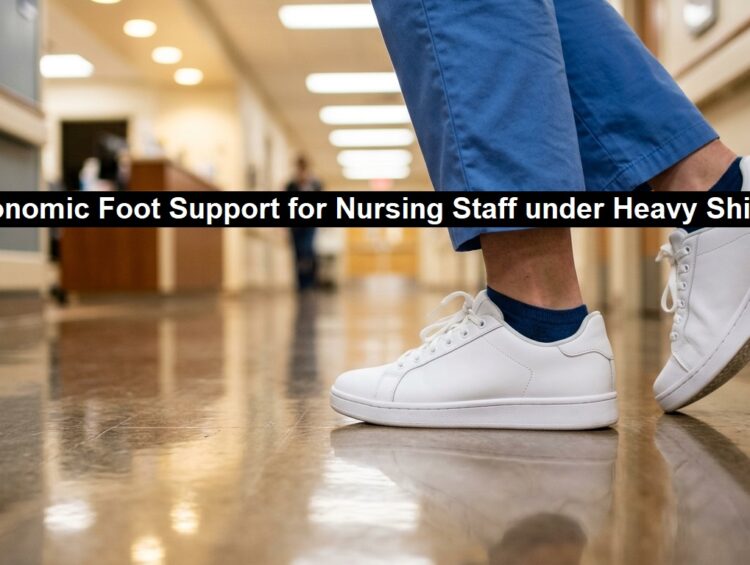
 Nursing is one of the most physically demanding professions, characterized by long hours, fast-paced environments, and continuous movement. It is not uncommon for a nurse to log between 8,000 and 10,000 steps during a single 12-hour shift. However, the true physical toll does not come from the distance walked, but from the cumulative hours spent standing on hard, unforgiving hospital floors. Over time, this constant weight-bearing activity leads to severe standing fatigue, joint pain, and chronic foot conditions like plantar fasciitis. To safeguard their long-term health and career longevity, nursing staff must prioritize occupational ergonomics, beginning with proper foot support.
The Biomechanics of Standing Fatigue
When standing or walking for hours on end, the feet serve as the primary shock absorbers for the entire body. With each step, the impact force travels up the kinetic chain, affecting the ankles, knees, hips, and lower back. Under normal conditions, the foot’s natural arches—transverse, medial, and lateral longitudinal—flex to distribute this weight.
However, during prolonged shifts, the muscles and ligaments that support these arches begin to fatigue and stretch. This leads to a condition known as overpronation, where the arch collapses inward, causing the ankle to roll. Overpronation alters the biomechanical alignment of the leg, putting unnatural rotational forces on the knees and hips, which frequently manifests as chronic lower back pain by the end of a shift. Furthermore, the repetitive strain on the plantar fascia—the thick band of tissue running along the bottom of the foot—can cause micro-tears, leading to the sharp, debilitating pain of plantar fasciitis.
Read: Daily Healthcare Tips to Maintain Physical and Mental Health
Why Cushioning Alone is Not Enough
Faced with foot soreness, many nurses default to purchasing shoes with maximum cushioning. While thick, soft memory foam or gel footbeds provide immediate comfort when first slipped on, they fail to address the root cause of standing fatigue.
Cushioning merely dampens impact; it does not provide structural stability. In fact, excessively soft shoe insoles compress completely under the body’s weight within the first few hours of a shift, leaving the foot flat and unsupported. Without structured alignment, the muscles in the foot must work twice as hard to maintain balance and stabilize the ankle. This constant micro-contraction is what causes the deep, aching fatigue that lingers long after a shift has ended.
The Role of Rigid Nylon-Core Support
To truly alleviate standing strain, footbeds must offer active structural support rather than passive cushioning. This is where specialized orthopedic inserts become essential. Rather than relying on soft foam, modern occupational orthotics utilize a rigid nylon-core support system.
A rigid nylon shell provides a solid, semi-flexible arch foundation that does not collapse under weight. This design accomplishes three critical ergonomic goals:
- Even Weight Distribution: By supporting the arch, the insole redistributes pressure across the entire sole of the foot, eliminating high-friction hot spots under the heel and metatarsal heads.
- Subtalar Joint Stabilization: A deep heel cup combined with rigid arch support stabilizes the subtalar joint, preventing overpronation and keeping the ankle in a neutral position.
- Kinetic Chain Realignment: Correcting foot posture realigns the knees, hips, and spine, significantly reducing joint shear and lower back strain.
For healthcare professionals seeking relief from daily physical strain, incorporating structured ergonomic arch support insoles into their daily duty footwear can significantly minimize muscular fatigue and joint wear on concrete corridor floors.
Practical Foot Care Tips for Nursing Staff
Beyond selecting proper orthotic support, nurses can adopt a few simple habits to protect their feet during and after shifts:
- Rotate Footwear: Avoid wearing the same pair of shoes two days in a row. Rotating shoes allows the midsole materials to fully decompress and dry, maintaining their structural integrity.
- Calf and Arch Stretches: Perform simple wall stretches for the calves and roll a tennis ball or frozen water bottle under the arch of the foot during breaks to relieve muscle tension.
- Active Recovery: Elevate the feet above heart level for 15 minutes after returning home to promote venous return and reduce lower-limb swelling.
By combining active stretching routines with rigid, biomechanically sound foot support, nurses can protect their musculoskeletal health and focus on what matters most: delivering exceptional patient care.