 editor
 Nebulisers, inhalers, etc., are very commonly seen medical devices which help in treating respiratory diseases, such as Asthma, COPD, chronic bronchitis, pneumonia, lung infection, etc. Many people suffering from such health concerns keep nebuliser machines or inhalers at home to avoid unnecessary problems.
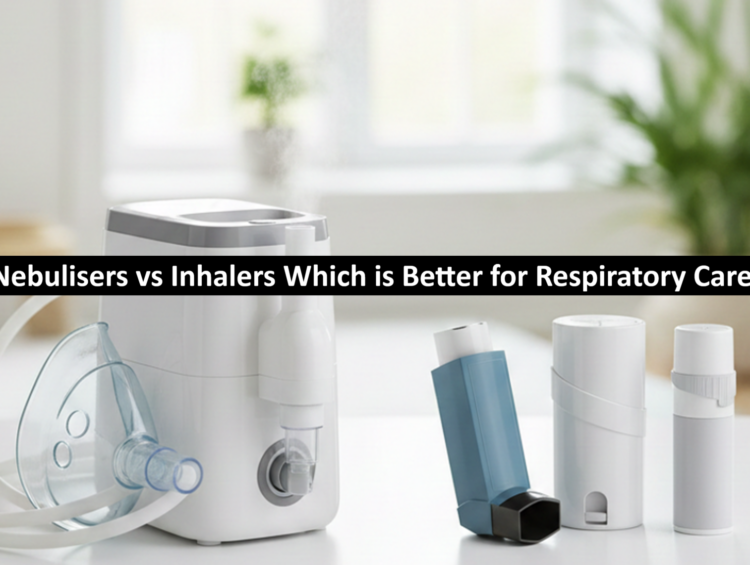
Both the machine helps in applying medication directly to the lungs to clear the breathing passage, and the patient breathes properly. But there are still several differences between them in terms of usability, suitability, portability, and size.
To understand which is better for respiratory care, you have to analyse the characteristics of both the devices and understand how they work. Only then can you conclude and choose the best device for yourself.
Functionality of Inhalers and Nebulisers: How they Work?
While treating chronic illnesses like asthma, COPD, and other respiratory diseases, doctors prescribe Nebulisers, or Inhalers, to apply the medicine. But choosing a particular option between these two is always a matter of debate. Understanding the functionality of the nebuliser machine and inhaler might give you a fair picture.
A) Functionality of Nebulisers
Nebulisers are one of the most important pieces of medical equipment for respiratory diseases. This device functions through power, and it is engineered as a tabletop design. When lungs can’t function properly, doctors use this respiratory equipment to provide medicines to the patients. It converts the liquid medicine into a vapour-like consistency, so that patients can easily inhale it and their bodies absorb the medicine quickly.
Best portable nebuliser machines use ultrasonic waves, a strong compressor, or mesh technology to convert the medicine into mist, for quick absorption, and provide quick relief. Patients can slowly inhale this medicine mist within 5-20 minutes, while breathing normally. Patients have to wear a mask, which helps them inhale the medicine.
There is a small section within the mouthpiece where you have to put the liquid medicine. You just have to power on the device and then wear the mouthpiece properly. The machine will then start converting the medicine droplets into aerosols.
B) Functionality of Inhalers
Inhalers also do the same job as the nebuliser machine, but their functionality is completely different. An inhaler is a much smaller device which you can hold in your hand. Using this device, patients can directly inhale the medicine in seconds, which is directly absorbed by the lungs.
It converts the medicine to a mist or to a powdered form. You need to insert the device into your mouth properly and then press it. The device will spray the medicine directly into your mouth for quick inhalation.
The medicine particles that inhalers release are 1-5 microns, which are easier to absorb. Depending on the type of medicine particles it creates, there are different types of inhalers available. Metered-Dose, Dry Powder, Soft Mist, etc., are some of the varieties of Inhalers available, offering different functionality.
While using an inhaler, users must know the coordination of pressing the medicine and deep inhaling at the same time. This coordination is the only way to get effective results, or else the medicine will be wasted.
Read: How to Choose the Best Cosmetic Dentist in Philadelphia: Expert Tips
Benefits of Nebulisers
No Coordination is Required
The main functionality of Nebulisers is to directly target the mist-like medicine to the lungs. The mouthpiece available will help you to easily inhale the medicine while you can breathe normally. Patients get 5-20 minutes to inhale the medicine completely.
As no breathing coordination is required, the device can be used by anybody, from infants to the elderly. Even during severe breathing problems, patients can get effective health care.
Relaxes Airways
Nebulisers function best for patients suffering from chronic bronchitis, COPD, asthma, etc., because it quickly relaxes the airways. When your airways relax, it also helps loosen the mucus and coughing. Also, if a patient is suffering from shortness of breath, you can also use any of the best portable nebulisers to treat such problems.
Versatile Uses
Nebulisers can support a versatile group of medicines. Doctors use this device to give antibiotics, steroids, saline, and bronchodilators to different patients who need immediate absorption of medicine. It can help in hydrating the airways and widening the air passage. Nebuliser machines can also be used to treat pneumonia, providing post-viral care, lung infections, etc.
Faster Mucus Clearance
It quickly clears your mucus by opening airways. Best portable nebuliser machines directly target your lungs and clear mucus and airways, so that the medicine can quickly reach your lungs.
Delivery of Higher Volume
With the use of nebulisers, higher volume delivery of medicine is possible. It helps in getting first-hand treatment in critical scenarios. You can get sufficient time during an emergency to treat your patient at home before admitting him to the hospital.
Benefits of Inhalers
Accurate Delivery
While giving critical medicines like bronchodilators, timing is very important. The medicine should reach the targeted airways faster. Inhalers are quick in action and deliver the medicine as fast as possible, bypassing the digestive system, and improve lung deposition up to 50% faster than any other technique.
Minimal Risk of Side Effects
Inhalers are completely safe to use and have minimal side effects. Nebuliser machines have a few side effects compared to inhalers. As the doses induced by an inhaler are very minimal, the risk of side effects like bone loss, weight gain, etc., is almost minimal. Because of this, adults, children, senior citizens, and even pregnant women can use inhalers.
Portability
Another benefit of using an inhaler is its portability. It is a pocket-sized device that can easily be carried by anybody. Even the best portable nebulisers are much bigger than inhalers. In today’s active life, you may need to carry your medication with you. An inhaler is a small device that you can carry with you everywhere without anybody noticing.
Versatility
Inhalers have versatile uses. It is a better choice for long-term use in daily life. You can use them while exercising, before sleeping, and during other daily activities. Also, multiple types of inhalers are available, which can give you the freedom to choose the perfect option as per your needs.
Key Differences Between Nebulisers and Inhalers
Though both nebuliser machines and inhalers are related to respiratory care, there are some key differences that you must know:
- Inhalers are a great option when it comes to portability. This small pocket-sized device can easily be carried by anyone, from children to adults. Nebulisers are bulkier compared to inhalers. Even the best portable nebulisers are twenty times bigger than inhalers.
- While using inhalers, you need strong coordination of breathing and pumping of the machine; nebulisers don’t need any kind of coordination. You can easily breathe while inhaling the medicine through nebulisers.
- Nebulisers need plugging, while inhalers don’t need any power supply.
- Inhalers provide faster relief than nebulisers. It carries the medicine directly to the targeted area, clearing the airways. Nebulisers also did the same job at a slower speed but consistently.
- The cost of inhalers is also less than that of a nebuliser machine, making them a great choice for long-term respiratory care.
Conclusion
Both nebulisers and inhalers have their own benefits and shortcomings. Inhalers support a daily lifestyle, whereas nebuliser machines give consistent support. Nebulisers can be used by anybody, even patients who are extremely frail and cannot breathe coordinately to use inhalers. Inhalers, on the other hand, have many additional benefits that nebulisers don’t have. Both of them are equally great in providing respiratory care. Inhalers -vs- nebulisers, the debate only ends when you consult your doctor. Only your doctor can suggest which device will be the best fit for you.